
Industrial Production Digitalization: Why Act Now and How to Avoid Common Mistakes
How do you digitalize your production site without getting it wrong? DevTeix, expert in custom industrial software for over 30 years, guides you from field audit to deployment.
Written by
Nicolas Tilkin
Business Development Manager
Maxime Canella
Software Engineer
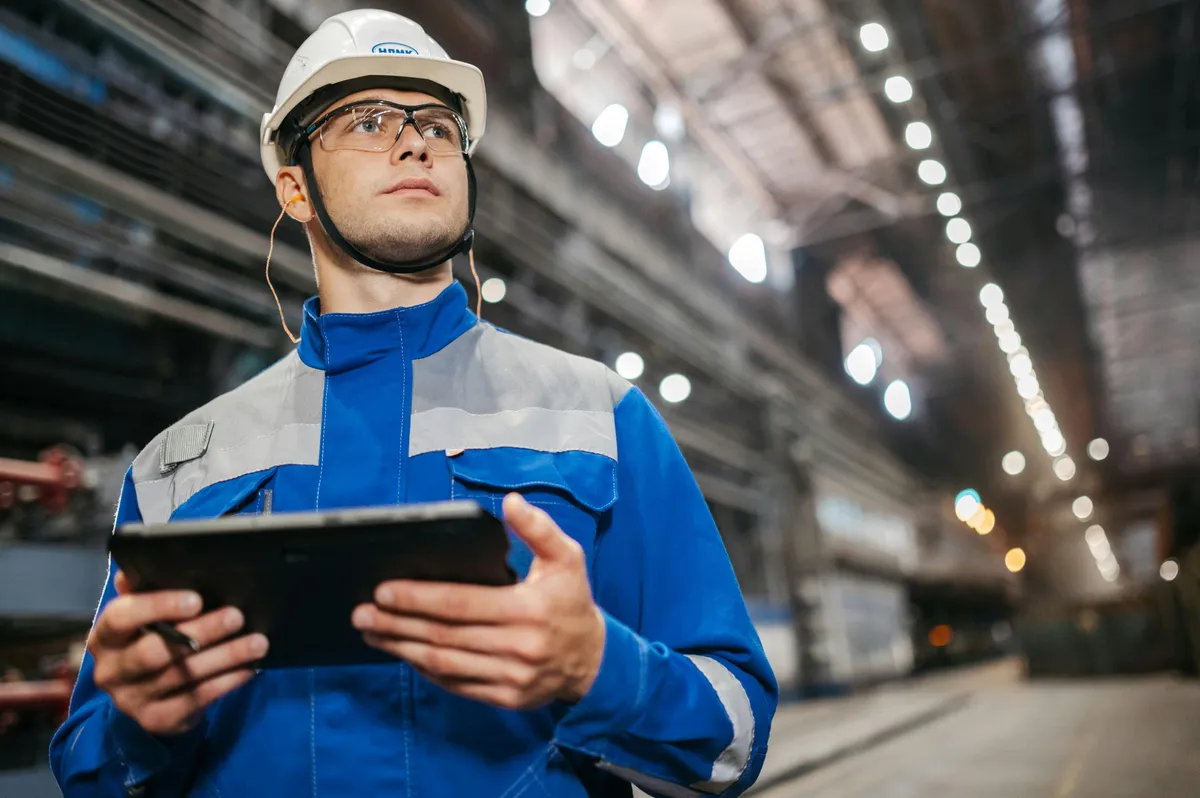
In metalworking, steel processing and broader industrial transformation, competitiveness is increasingly decided on a battleground that many European SMEs have not yet fully invested in: the digitalization of their production.
Margins are shrinking. Lead times are getting shorter. Traceability requirements are tightening. In this context, running a production line with Excel files, paper sheets and disconnected systems means losing ground every single day.
Industrial digitalization is not about adding one more piece of software. It is about organizing how information flows from the workshop floor to management dashboards, so that better decisions can be made faster.
The limits of traditional shop-floor management
In cutting, forming, welding or assembly workshops, the same problems keep coming back. Information arrives too late. A work order is mistyped. A quality check is recorded by hand and then lost.
Each issue looks minor on its own. But they pile up and weigh heavily on profitability.
Production managers know them well:
- Loss of traceability on materials, batches and operations performed.
- Double entry between ERP, Excel files and field tools.
- No real-time visibility on the progress of manufacturing orders.
- Human errors caused by manual entry and informal handoffs.
- Late deliveries due to bottlenecks detected too late.
- Material waste from imprecise consumption tracking.
These obstacles are not inevitable. They are symptoms of a gap between the real complexity of production processes and the tools used to manage them.
To name these blockers more precisely, our article on the 8 challenges that slow industrial production breaks down the most common delays, entry errors, data silos and traceability problems.
What industrial digitalization actually changes on the floor
Digitalizing a production site does not mean buying generic software and forcing it on your teams. It means rethinking how information flows, from the machine all the way up to the production manager’s dashboard.
A well-executed digitalization lets you:
- Centralize production data in real time: quantities produced, scrap, cycle times, equipment status.
- Connect existing systems: ERP, machines, IoT sensors, scales, scanners and business apps.
- Eliminate double entry between office, workshop, quality, inventory and accounting.
- Give operators field tools that fit their reality: clock-in, quality control, production reporting, maintenance.
- Steer through data: anticipate drift, detect bottlenecks, decide based on actual numbers.
In the industrial environments where DevTeix deploys solutions, the goal is not to produce pretty dashboards. The goal is to obtain reliable data at a moment when action is still possible.
Once that field data becomes reliable, it can also feed more advanced use cases such as calculating production times with AI.
Industry 4.0: a concrete opportunity for industrial SMEs
Industry 4.0 is often associated with large groups. That is a mistake. Industrial SMEs and mid-cap companies in Belgium, France and across Europe have proportionally just as much to gain from digitalizing their production.
In metalworking specifically, requirements around material traceability, tolerance management, certification tracking and customer reporting are getting stricter. Digital tools are no longer just a competitive edge: they are becoming a condition of market access.
Companies that take the step gain in responsiveness, improve the quality of their output and offer a higher level of service to their customers. Those that wait risk a competitiveness gap that is hard to close later.
Why off-the-shelf industrial software often fails
Many manufacturers learn this the hard way: a generic platform rarely adapts to the complexity of a real workshop.
Each production site has its own processes, its own item structures, its own flow constraints, its own operator habits. Forcing a standard template often creates new problems while trying to solve old ones.
Failed digitalization projects share a common pattern: the tool was chosen before the processes were understood. Teams work around the software, leadership loses confidence, the project is dropped and the investment is lost.
The right approach is the opposite: start from the floor, understand real constraints, then build the tool that exactly fits the business.
How DevTeix supports manufacturers across Europe
Based in Liege, Belgium, DevTeix has been developing custom industrial software for over 30 years. Companies like Tata Steel, Eiffage, Soprema and Iemants trust our solutions in Belgium, France, the Netherlands, Germany, Poland and beyond.
Our team is not made of generalist developers. Several of our analysts come from the industrial world: they have worked in production, they have seen workshops from the inside, they understand your constraints before you even articulate them.
Our scope covers:
- Custom development: ERP, MES, WMS, CRM and production management built from your real processes.
- System integration: connecting your existing tools, machines, sensors, ERP and APIs.
- Field and mobile apps: clock-in, quality control, inventory, maintenance, including offline mode.
- Audit and diagnosis: field observation, flow analysis and actionable recommendations.
Our method follows four simple steps: immersion, scoping, development, deployment with training included. The same people support you from analysis to post-deployment support.
Where to start your industrial digitalization project
The first step is not technical. It is an honest diagnosis of your current situation: where are your real bottlenecks? Where does information get lost? Which processes cost the most non-productive time?
That is exactly what we do during our field audit phase. We come to your site, we observe, then we deliver a concrete analysis with actionable recommendations.
Conclusion
Industrial production digitalization is no longer a question of company size or exceptional budget. It is a path open to SMEs, provided it is built on solid foundations: understanding the floor before choosing the tool.
Industrial companies that structure their digital transformation today gain a lead that is hard to catch up with. Those that wait suffer a quiet erosion of their competitiveness.
You run an industrial company in Europe — in metalworking, steel processing or any sector with a production line? Contact DevTeix for a free field audit: 30 minutes to understand your challenges, with no commitment.
Frequently asked questions
What is industrial production digitalization? +
Industrial production digitalization means connecting data, workstations, machines and management tools to steer production in real time. The goal is not just to replace paper, but to make information reliable, accessible and actionable.
Where do I start an industrial digitalization project? +
The first step is a field diagnosis: identify where information gets lost, which data is re-entered manually, which workstations cause delays and which existing tools must be connected.
Is off-the-shelf software enough to digitalize a workshop? +
Off-the-shelf software can fit simple processes, but it often fails in workshops with strong business constraints. In that case, custom industrial software lets you adapt the tool to real workflows instead of forcing the workflow to fit the tool.
Continue reading
Production Time Calculation: How AI Transforms Manufacturer Accuracy
Discover how artificial intelligence transforms production time calculation and the conditions under which it actually delivers value in a real industrial environment.
Read the article →8 Challenges That Slow Industrial Production — and How High-Performing Companies Solve Them
Delays, errors, data silos, quality pressure: industrial SMEs face concrete challenges. DevTeix identifies the 8 most frequent blockers and the field-tested solutions.
Read the article →